Muttart Conservatory.
Four rooms
of pyramidal shape. Each pyramid contains plants from different environments.


Muttart Conservatory.
Four rooms
of pyramidal shape. Each pyramid contains plants from different environments.
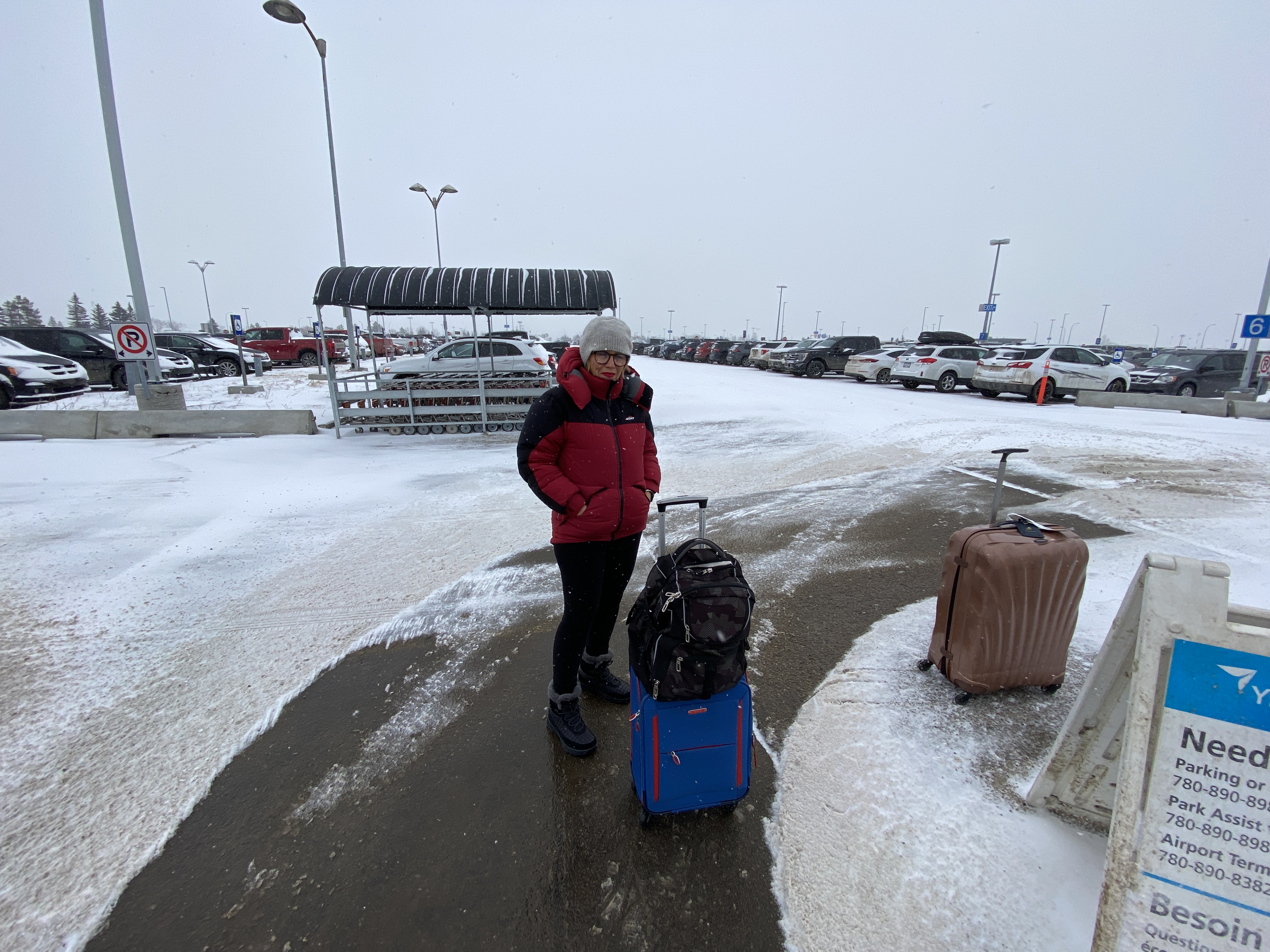
Travel by plane from Vancouver to Edmonton.
Arrive with
light fluffy snow.
Edmonton
where Pam, G




Vancouver is a major city in the province of British Columbia.
Vancouver
is a busy port between the Pacific Ocean
and the Rockies.
Population
700,00
Ethnically
very diverse.

.JPG)
.JPG)
.JPG)
.JPG)
.JPG)
.JPG)
.JPG)

.JPG)
.JPG)


I dream of the day.
The ducks line up.
I just wanna play.
My numbers come out.
Backflip and shout.
Hey, hey, hey.
That’s all I can say.
A weatherboard house.
For me and my spouse.
A garage for me and my tools.
They are my precious jewels.
Smell the BBQ on the deck.
Mulberries fall mulberries wreck
the freshly mowed green lawn.
Roses smile for me at dawn.
Play footy with my mates.
We all control our fates.
Handpassing, yelling, tackling.
All our knees and heads are crackling
shepherding and kicking.
We’re all together clicking.
In the grand final. BOG.
Sing the team song. Sing with glee.
Heads turn and follow my car.
Honing across the sizzling tar.
The latest model in our town.
With the roof pulled all the way down.
It’s crimson candy red.
It’s turning each and every head.
I give them loud music blaring.
Watch them all staring.
Open the front gate.
Greeted by my wagging barking mate.
He stands on his back feet.
A warm and wet and mushy greet.
My perfect partner fills a gap.
She sits contently on my lap.
For years I’ve been trying to find.
Someone always this nice and kind.

The Derwent
River begins in Lake St Clair. Somewhere south of the Tasman Bridge the Derwent
River evolves into Storm Bay. The Derwent River is about 180 km long. Upper tributaries are
developed for hydro power. Around New Norfolk irrigation from the river for
hops and fruit.
1793: The River
Derwent was called Rivière du Nord by the French admiral Bruni d’Entrecasteaux.
A couple of months later the British under John Hayes named the river after the
River Derwent in England. The name Derwent is Celtic for valley thick with
oaks.
1943: A
floating bridge was built across the River Derwent to link Hobart’s eastern and
western shores. It consisted of a series of pontoons with a movable span near
the western shore. The floating bridge frequently suffered substantial storm
damage. There was constant disruption of road and water traffic due to the
raising of lift span.
1960:
Construction of the Tasman Bridge began.
1965: The Tasman
Bridge officially opened.
1975: On the
5th January at 9:27 p.m. the Lake Illawarra struck a concrete pylon of the
bridge, resulting in the deaths of twelve people and its closure for two
years. It removed two pylons and 127m of the bridge. Five motorists
and seven crew of the ship died. The ship was off course and at fault.
The bridge
connects the two halves of Hobart. A lot of people live on the eastern shore
and worked in the CBD of Hobart. With the bridge down Hobart became two cities.
At the time the Bowen bridge did not exist. The only way across the river was
via Bridgewater. Enterprising business men started transporting commuters
across the river. Boom times for ferry operators.
The river is
35m deep at this point and the ship still lies at the bottom of the river with
a concrete slab from the bridge on top of it. Ships regularly pass over the
sunken ship without a thought. You can go diving on the sunken ship but it is
very muddy with low visibility.
1977:
Rebuilding of the bridge finished on 8/10/1977.
When the
bridge was rebuilt the ferry services stopped. One ferry operator diversified
into building ships. Very successfully and still going as Incat.
Today every
ship passing under the bridge picks up a local harbor pilot before passing
under the bridge. All traffic is halted. Everybody is once again reminded of
the day the bridge ceased connecting Hobart.
Swimming
across the river you do tend to look for and imagine the ship lying down there.
When running the bridge, you tend to enjoy the view. You don’t think of the traumatized
bridge or photos of cars on the broken bridge.
Normally I
see the bridge covered by a blanket of living, moving runners and walkers. Concentrating,
focused and pounding the bitumen. This year I run amongst fewer runners. The
crowd is ahead of me.
Across the
bridge is the second drink station. Opposite
Government House. Two cups of water for me. A few volunteers scurry around
picking up discarded cups. Behind them is the Cenotaph. Every year I run I get
slower and slower. A glance at the Cenotaph reminds me of the alternative to
getting slower and older.
Previous
races tell me the finish is a tease. Run past the finish line, tour Battery
Point, and then come back to cross the finish line.
Crossing the
finish bump in the road I discern an idea of my time. I am hot and tired and
grab some water.
I try and
find my lift home. It is a very big very active crowd. Thousands of happy
sweaty people. We are all wearing medals. Some ran the bridge for the first
time. Some ran better than last time. Some are getting older and slower. Everybody
medal tells a story.
I eventually
find my lift. We now discuss where we should go for a cup of coffee. We depart heading
towards our chosen cafe.
Behind us a
happy crowd talking; drinking water and taking photos. The organisers are less visible.
They have created a delicious, wonderful crowd full of proud, exhausted, chatty
people. The organisers have made many of us Hobartians a tiny bit healthier. Physically,
socially and emotionally. One runner came first but, I think, the organizers,
volunteers, spectators and the runners are all winners.
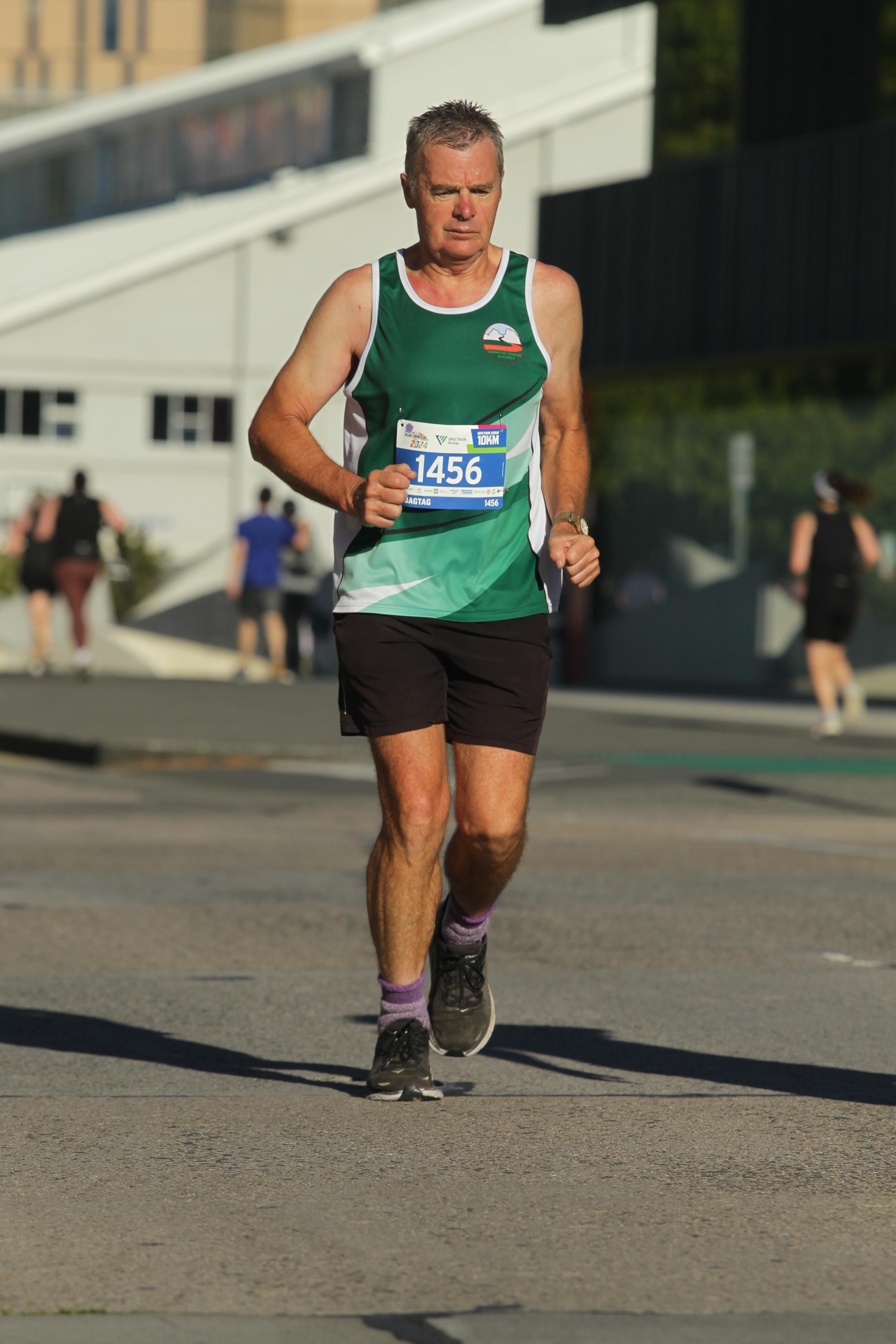
I watch the
first wave of runners take off. I wander around waiting to join the second wave
of runners. An official tells me there is no second wave, only one wave. Start
running.
I run down a
semi deserted road. The peloton of runners has disappeared ahead of me. Ah
well. Better run. I enjoy plodding down the road. On my left is the river. On my
right is native bush which hides the Kangaroo Bluff Battery.
1873: Local cruising
Russian warships prompted the need for a third battery to support Battery Point
and the Queens Battery.
1884: Kangaroo
Bluff Battery or Fort was completed. It was surrounded by a moat and prickly
hawthorn hedges as protection from enemies on foot. Shots from the battery were
fired in 1884.
The run
follows the esplanade around the river until we enter the Bellerive shopping
centre. This area has many historical homes and buildings which were sleeping
until us runners arrived and woke them up.
The first
water station. I take two cups of water and tip one cup over my head and shirt.
My running experience is water is good. It prevents me lying on the ground
trying to ascertain what are those people looking at.
Run up Rosny
Hill. Local knowledge tells me on top of Rosny Hill is a lookout with sweeping
views of our river, the mountain, The Tasman Bridge and the Royal Tasmanian
Botanical Gardens. We plod up Rosny Hill bypassing the top of Rosny Hill.
We continue pass
the Clarence Aquatic Centre and Sports Centre.
1963: The
Clarence War Memorial Pool opened. Surrounded by pleasant gardens.
1982: It was
decided to cover the pool to allow it to operate all year. Covered with a flexible
bubble. The bubble was very effective
and a popular landmark. At the time it was the premier aquatic centre in the
state.
2002/3:
Bubble was replaced with a permanent building.
We now run
onto a Tasman Bridge without cars. It is a delightful experience with an
amazing view. Memories of driving the bridge or walking the narrow paths on
either side vanish and are replaced by the view. At the summit of the bridge, I
feel like exploding into a backward somersault, but I’m a stranger to such
behaviour and now is not the time to…
I remember
the race and plod on down the bridge. I am aware of an annoying wind. The
arrival of this wind makes running more difficult and gives my head something
to think about.


