Tuesday, 28 August 2018
Europe : 10.8.18 Bamberg words
A guided tour in Bamberg.
On the bus the guide gives us the name of the local beer in her town. And the name of the glass and the place and custom for drinking their famous beer.
The local custom is to eat sausage and pickled onions with beer. This is called beer with music because afterwards you create sounds resembling...
Guide says: Other cities say their buildings are 3/400 years old. But our buildings are authentic old buildings. Other cities had their buildings destroyed in the war and had to rebuild them. But you could say we were lucky. Our old buildings are authentic.
There are 150 guides walking around Bamberg. Carrying big lollipops and microphones followed by about 20 earphones and cameras.
Our guide arrives at a cathedral. She says, “I’ll give you 9 minutes to look around inside.
Later we arrive at a viewpoint. This time she says, “I’ll give you 1 minute to take photos from over there.”
She points at the spot to stand. We oblige and all take identical photos.
Back on the bus the guide is groaning because she has to mention other towns. Where they drink dramatically inferior beer and they even drink it in beer gardens not cellars. And their sausage...well they seem to like it.
On the bus the guide gives us the name of the local beer in her town. And the name of the glass and the place and custom for drinking their famous beer.
The local custom is to eat sausage and pickled onions with beer. This is called beer with music because afterwards you create sounds resembling...
Guide says: Other cities say their buildings are 3/400 years old. But our buildings are authentic old buildings. Other cities had their buildings destroyed in the war and had to rebuild them. But you could say we were lucky. Our old buildings are authentic.
There are 150 guides walking around Bamberg. Carrying big lollipops and microphones followed by about 20 earphones and cameras.
Our guide arrives at a cathedral. She says, “I’ll give you 9 minutes to look around inside.
Later we arrive at a viewpoint. This time she says, “I’ll give you 1 minute to take photos from over there.”
She points at the spot to stand. We oblige and all take identical photos.
Back on the bus the guide is groaning because she has to mention other towns. Where they drink dramatically inferior beer and they even drink it in beer gardens not cellars. And their sausage...well they seem to like it.
Europe : 9.8.18 Wurzburg words
One day we went on a
guided tour of a palace. The guide said that the surrounding town was destroyed
on 16 March 1944. The palace was damaged. The rebuilding and restoration
finished in 1996.
On our tour the guide showed us into a room which contained a large photo of the town after it was bombed. 5000 people dead. He said people are often affected by seeing the picture. I looked at the picture of endless destroyed buildings and thought I’m not affected. I was not directly involved. This picture doesn’t affect me but I need to wipe these tears from my eyes so I can walk out of this room.
Back on ship all our emotional contact has been with fellow travellers. Most of this contact has been very good. Last night we had a really good meal of roast lamb and vegetables. We spent the whole meal talking about home towns, work, grandkids and...Back in the room I thought that we haven’t mentioned Europe once. Then I realised that once we had talked about the lock we went through.
I will briefly mention fellow travellers.
All the travellers have been very successful in business or careers back in Aus. They are used to being “the one,” the boss or in charge. They suddenly have to follow and conform.
There are various groups starting to form.
Out of 160 passengers there is a small huddle of 3 embarrassed and derided smokers.
4 tennis playing ladies from Brisbane. They all left their husbands behind.
A group that arrived together and is the tour within a tour who reserves a table for themselves.
There is the group of just about everybody who complains about one man for being talking loud, being boastful and for talking endlessly about himself.
There are no young people searching for mates or young ockers trying to prove they are Australian by drinking and yahooing.
Though there are definitely old people who have proved that they still know how to drink and dance late into the evening.
On our tour the guide showed us into a room which contained a large photo of the town after it was bombed. 5000 people dead. He said people are often affected by seeing the picture. I looked at the picture of endless destroyed buildings and thought I’m not affected. I was not directly involved. This picture doesn’t affect me but I need to wipe these tears from my eyes so I can walk out of this room.
Back on ship all our emotional contact has been with fellow travellers. Most of this contact has been very good. Last night we had a really good meal of roast lamb and vegetables. We spent the whole meal talking about home towns, work, grandkids and...Back in the room I thought that we haven’t mentioned Europe once. Then I realised that once we had talked about the lock we went through.
I will briefly mention fellow travellers.
All the travellers have been very successful in business or careers back in Aus. They are used to being “the one,” the boss or in charge. They suddenly have to follow and conform.
There are various groups starting to form.
Out of 160 passengers there is a small huddle of 3 embarrassed and derided smokers.
4 tennis playing ladies from Brisbane. They all left their husbands behind.
A group that arrived together and is the tour within a tour who reserves a table for themselves.
There is the group of just about everybody who complains about one man for being talking loud, being boastful and for talking endlessly about himself.
There are no young people searching for mates or young ockers trying to prove they are Australian by drinking and yahooing.
Though there are definitely old people who have proved that they still know how to drink and dance late into the evening.
Europe : 8.8.18 Miltenberg words
Here we go. Cruising up the Rhine River
through Germany.
Occasionally we stop and have a guided walking tour. The guide will be efficient, polite, well-spoken and well informed.
But most of the time we spend on the boat talking with fellow Aussies, and a scattering of Kiwis and Englishmen. All of a similar age; most are couples.
Opening question is normally, “Where do you come from?”
Top answer is Adelaide or Brisbane. There is always another couple from Tassie. In this case they are from Ulverston.
Next question normally is children and grandchildren. "How many, where do they live and what do they do?”
Then talk involves cruising. “How many and where?”
Top answer is, “First cruise.”
More talk involves that old faithful, “Which team do you barrack for?”
For the first few days we try to find our place in this group. Should I be the class clown, a leader, an intelligent commentator or the one who makes the really stupid remark.
I also have to learn who to try and sit next to and who to try and avoid. There is almost nobody to avoid but perhaps some people have put me in that box.
Very little talk about Germany, Europe or castles apart from one guy who said, “ABC stands for another bloody castle.”
It is only when we get off the boat and away from the organised tours do we realise we are in a foreign country. With the guided tours we feel we can point at and prod the locals. We feel we are at a zoo and don’t these people have strange habits.
Fawlty Towers rears its head. With the phrase, “Don’t mention the war. I did but I think I got away with it.”
One guide said, “I don’t want to talk about the war. It’ll take two weeks and I don’t have time.”
The other guides talk about what the allied or American bombers destroyed or didn’t destroy. Lots of mention of rubble, damage repair and rebuilding.
With most of the castles they tell us when they were built. Then they talk about the French destroying it or the Americans bombing it. What I want to know is what person suddenly decides he’ll build a castle. How does he finance it and get people to build it. There is absolutely no emotional involvement or attachment with the building. The attitude seems to be. Look at it. They don’t build them like that nowadays.
When I look at a castle I see people. When the guides look at a castle they see buildings. They see a big building destroyed by the French and then rebuilt.
The German psyche seems to be war means buildings get destroyed. And then you have rubble and have to rebuild.
The Dutch psych was different. They have been taken over by the French, Spanish and Germany. They see co-operation and getting on with neighbours as fundamental.
In Germany I hope the feeling is. It’s our turn to help refugees and help people recover and rebuild from war. It’s very difficult to know.
If there was an election in Germany I would have no idea what the issues are, what the people think and who would win. I could find out by going back to Hobart and reading or listening to experts.
Occasionally we stop and have a guided walking tour. The guide will be efficient, polite, well-spoken and well informed.
But most of the time we spend on the boat talking with fellow Aussies, and a scattering of Kiwis and Englishmen. All of a similar age; most are couples.
Opening question is normally, “Where do you come from?”
Top answer is Adelaide or Brisbane. There is always another couple from Tassie. In this case they are from Ulverston.
Next question normally is children and grandchildren. "How many, where do they live and what do they do?”
Then talk involves cruising. “How many and where?”
Top answer is, “First cruise.”
More talk involves that old faithful, “Which team do you barrack for?”
For the first few days we try to find our place in this group. Should I be the class clown, a leader, an intelligent commentator or the one who makes the really stupid remark.
I also have to learn who to try and sit next to and who to try and avoid. There is almost nobody to avoid but perhaps some people have put me in that box.
Very little talk about Germany, Europe or castles apart from one guy who said, “ABC stands for another bloody castle.”
It is only when we get off the boat and away from the organised tours do we realise we are in a foreign country. With the guided tours we feel we can point at and prod the locals. We feel we are at a zoo and don’t these people have strange habits.
Fawlty Towers rears its head. With the phrase, “Don’t mention the war. I did but I think I got away with it.”
One guide said, “I don’t want to talk about the war. It’ll take two weeks and I don’t have time.”
The other guides talk about what the allied or American bombers destroyed or didn’t destroy. Lots of mention of rubble, damage repair and rebuilding.
With most of the castles they tell us when they were built. Then they talk about the French destroying it or the Americans bombing it. What I want to know is what person suddenly decides he’ll build a castle. How does he finance it and get people to build it. There is absolutely no emotional involvement or attachment with the building. The attitude seems to be. Look at it. They don’t build them like that nowadays.
When I look at a castle I see people. When the guides look at a castle they see buildings. They see a big building destroyed by the French and then rebuilt.
The German psyche seems to be war means buildings get destroyed. And then you have rubble and have to rebuild.
The Dutch psych was different. They have been taken over by the French, Spanish and Germany. They see co-operation and getting on with neighbours as fundamental.
In Germany I hope the feeling is. It’s our turn to help refugees and help people recover and rebuild from war. It’s very difficult to know.
If there was an election in Germany I would have no idea what the issues are, what the people think and who would win. I could find out by going back to Hobart and reading or listening to experts.
Europe : 4.8.18 Amsterdam words
I love Amsterdam. Not
because it is a scenic city with beautiful harbour. It’s not.
Not because of majestic old buildings. A few.
It is a liberal society full of happy, contented, well behaved people. This manifests itself with bikes. Every day a mixture of bikes, cars, trams and pedestrians traverse this city. With no signs, no hooting, no cursing or yelling, no waving of arms, very little road rage and very few accidents. Lots of tolerance and acceptance of other people.
This country has a very long liberal history.
First country to legalise same sex marriage. In 2001.
Legal euthanasia.
Very liberal laws for prostitution and drug use.
Long history of welcoming refugees. Going back hundreds of years.
I am not directly affected in most of these areas. I love to see the cannabis cookies in the shops next to a poster for gay pride week but I don’t buy.
Staying in Amsterdam is a bit like living in a theme park. All the locals and tourists seem to know their role.
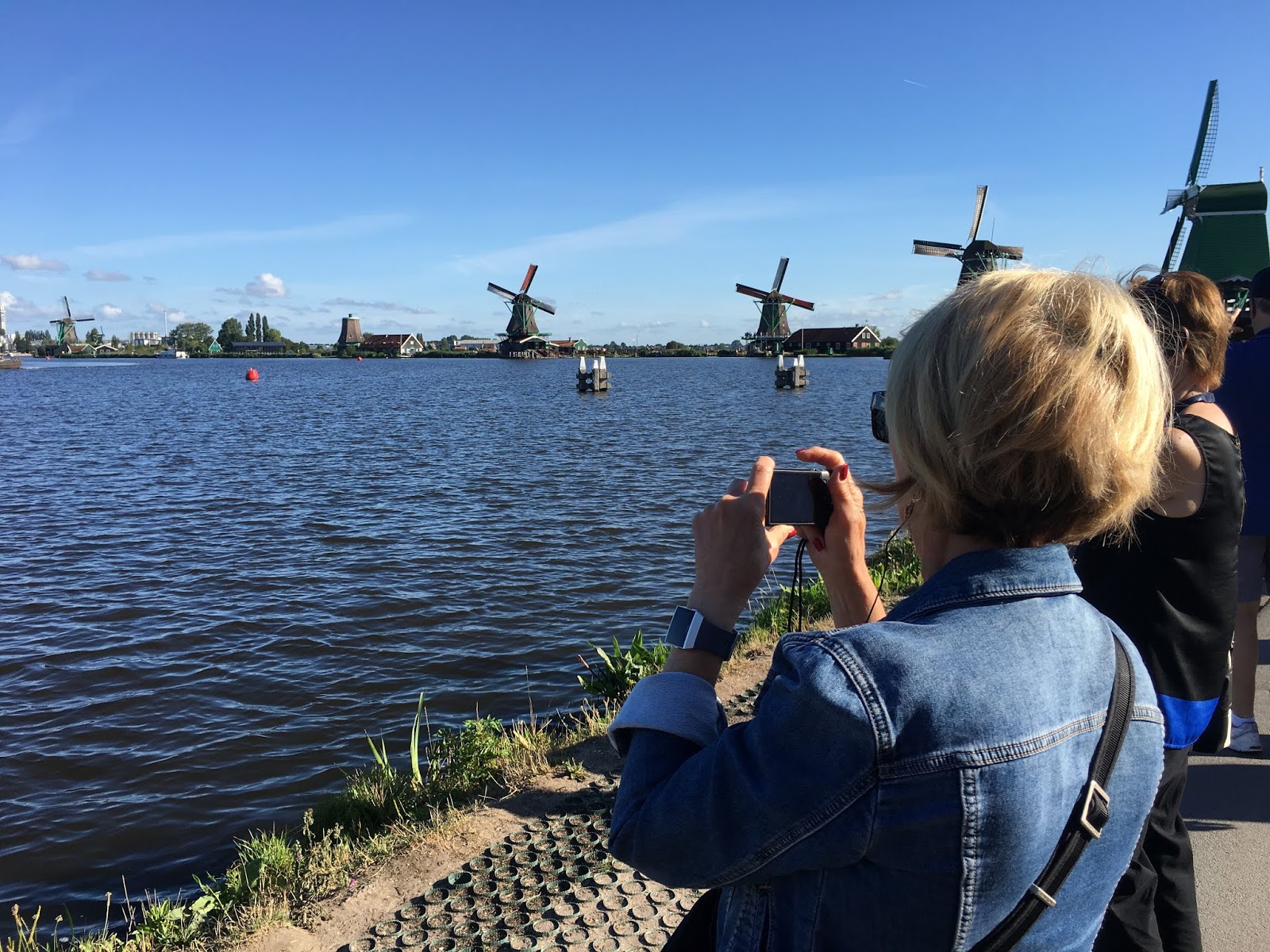
Tourists go to Ann Frank museum, look at pictures by Van Gough and buy a fridge magnet of a clog or a windmill.
The locals ride a bike and ask you where you are from. You find out later they just want to know what language menu to give you. When you ask for the English menu they assume you are from England. When you say you are Australian their reaction is, “That’s a long way.”
We went to a cafe which proudly said “traditional food “. Every item on the menu had traditional Dutch name. Things like chicken and chips had been given a Dutch name and was suddenly traditional Dutch food.
Walking around Amsterdam you see very little building or road works. Very few buskers, very little vandalism, no protestors, no aggressive street marketing and very little graffiti. A little bit of rubbish. Just enough to be cleaned up efficiently and prove they are not obsessive.
Subscribe to:
Posts (Atom)