Travel by plane from Vancouver to Edmonton.
Arrive with
light fluffy snow.
Edmonton
where Pam, G


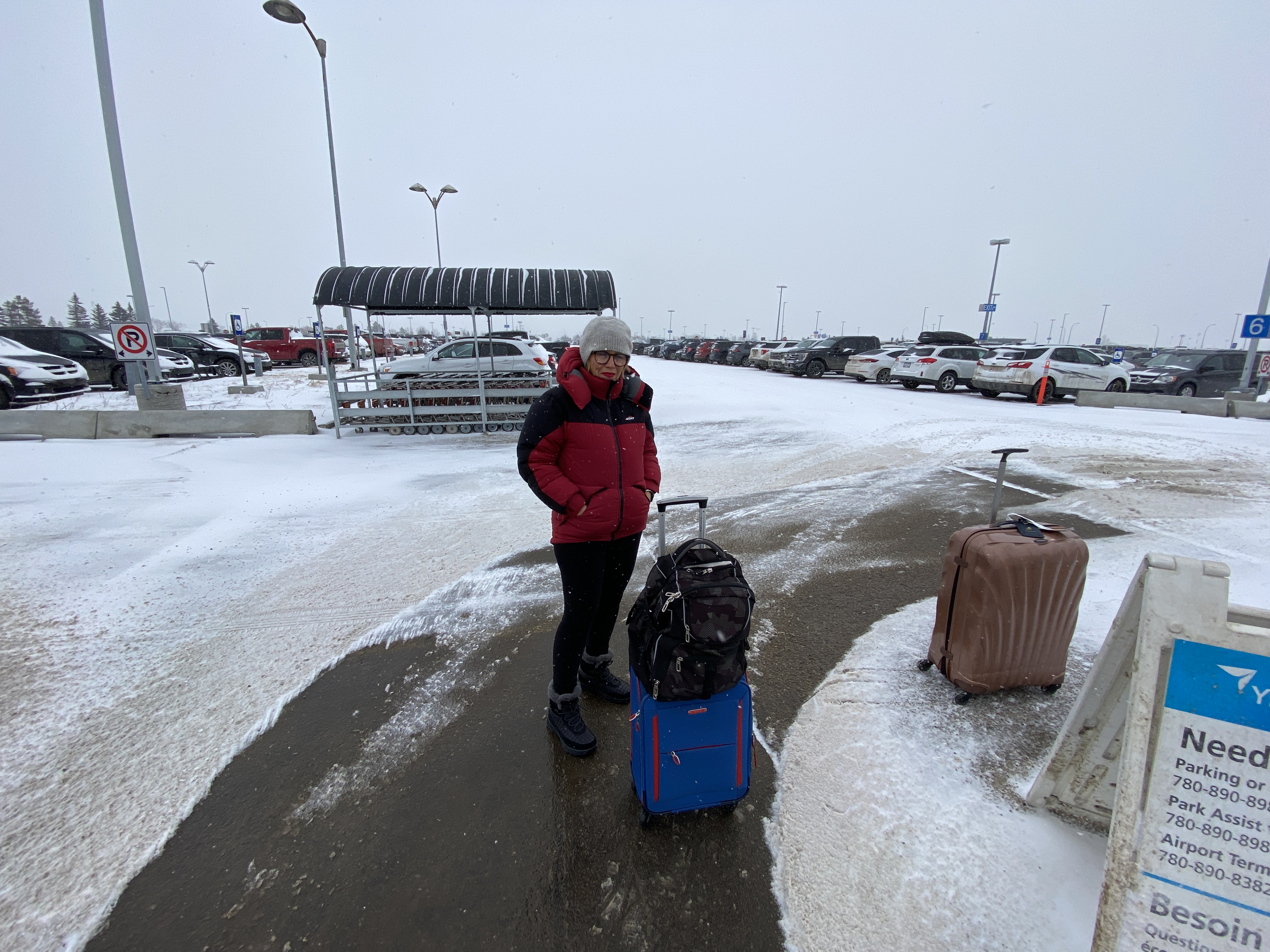


Travel by plane from Vancouver to Edmonton.
Arrive with
light fluffy snow.
Edmonton
where Pam, G
Vancouver is a major city in the province of British Columbia.
Vancouver
is a busy port between the Pacific Ocean
and the Rockies.
Population
700,00
Ethnically
very diverse.

.JPG)
.JPG)
.JPG)
.JPG)
.JPG)
.JPG)
.JPG)

.JPG)
.JPG)


I dream of the day.
The ducks line up.
I just wanna play.
My numbers come out.
Backflip and shout.
Hey, hey, hey.
That’s all I can say.
A weatherboard house.
For me and my spouse.
A garage for me and my tools.
They are my precious jewels.
Smell the BBQ on the deck.
Mulberries fall mulberries wreck
the freshly mowed green lawn.
Roses smile for me at dawn.
Play footy with my mates.
We all control our fates.
Handpassing, yelling, tackling.
All our knees and heads are crackling
shepherding and kicking.
We’re all together clicking.
In the grand final. BOG.
Sing the team song. Sing with glee.
Heads turn and follow my car.
Honing across the sizzling tar.
The latest model in our town.
With the roof pulled all the way down.
It’s crimson candy red.
It’s turning each and every head.
I give them loud music blaring.
Watch them all staring.
Open the front gate.
Greeted by my wagging barking mate.
He stands on his back feet.
A warm and wet and mushy greet.
My perfect partner fills a gap.
She sits contently on my lap.
For years I’ve been trying to find.
Someone always this nice and kind.

The Derwent
River begins in Lake St Clair. Somewhere south of the Tasman Bridge the Derwent
River evolves into Storm Bay. The Derwent River is about 180 km long. Upper tributaries are
developed for hydro power. Around New Norfolk irrigation from the river for
hops and fruit.
1793: The River
Derwent was called Rivière du Nord by the French admiral Bruni d’Entrecasteaux.
A couple of months later the British under John Hayes named the river after the
River Derwent in England. The name Derwent is Celtic for valley thick with
oaks.
1943: A
floating bridge was built across the River Derwent to link Hobart’s eastern and
western shores. It consisted of a series of pontoons with a movable span near
the western shore. The floating bridge frequently suffered substantial storm
damage. There was constant disruption of road and water traffic due to the
raising of lift span.
1960:
Construction of the Tasman Bridge began.
1965: The Tasman
Bridge officially opened.
1975: On the
5th January at 9:27 p.m. the Lake Illawarra struck a concrete pylon of the
bridge, resulting in the deaths of twelve people and its closure for two
years. It removed two pylons and 127m of the bridge. Five motorists
and seven crew of the ship died. The ship was off course and at fault.
The bridge
connects the two halves of Hobart. A lot of people live on the eastern shore
and worked in the CBD of Hobart. With the bridge down Hobart became two cities.
At the time the Bowen bridge did not exist. The only way across the river was
via Bridgewater. Enterprising business men started transporting commuters
across the river. Boom times for ferry operators.
The river is
35m deep at this point and the ship still lies at the bottom of the river with
a concrete slab from the bridge on top of it. Ships regularly pass over the
sunken ship without a thought. You can go diving on the sunken ship but it is
very muddy with low visibility.
1977:
Rebuilding of the bridge finished on 8/10/1977.
When the
bridge was rebuilt the ferry services stopped. One ferry operator diversified
into building ships. Very successfully and still going as Incat.
Today every
ship passing under the bridge picks up a local harbor pilot before passing
under the bridge. All traffic is halted. Everybody is once again reminded of
the day the bridge ceased connecting Hobart.
Swimming
across the river you do tend to look for and imagine the ship lying down there.
When running the bridge, you tend to enjoy the view. You don’t think of the traumatized
bridge or photos of cars on the broken bridge.
Normally I
see the bridge covered by a blanket of living, moving runners and walkers. Concentrating,
focused and pounding the bitumen. This year I run amongst fewer runners. The
crowd is ahead of me.
Across the
bridge is the second drink station. Opposite
Government House. Two cups of water for me. A few volunteers scurry around
picking up discarded cups. Behind them is the Cenotaph. Every year I run I get
slower and slower. A glance at the Cenotaph reminds me of the alternative to
getting slower and older.
Previous
races tell me the finish is a tease. Run past the finish line, tour Battery
Point, and then come back to cross the finish line.
Crossing the
finish bump in the road I discern an idea of my time. I am hot and tired and
grab some water.
I try and
find my lift home. It is a very big very active crowd. Thousands of happy
sweaty people. We are all wearing medals. Some ran the bridge for the first
time. Some ran better than last time. Some are getting older and slower. Everybody
medal tells a story.
I eventually
find my lift. We now discuss where we should go for a cup of coffee. We depart heading
towards our chosen cafe.
Behind us a
happy crowd talking; drinking water and taking photos. The organisers are less visible.
They have created a delicious, wonderful crowd full of proud, exhausted, chatty
people. The organisers have made many of us Hobartians a tiny bit healthier. Physically,
socially and emotionally. One runner came first but, I think, the organizers,
volunteers, spectators and the runners are all winners.
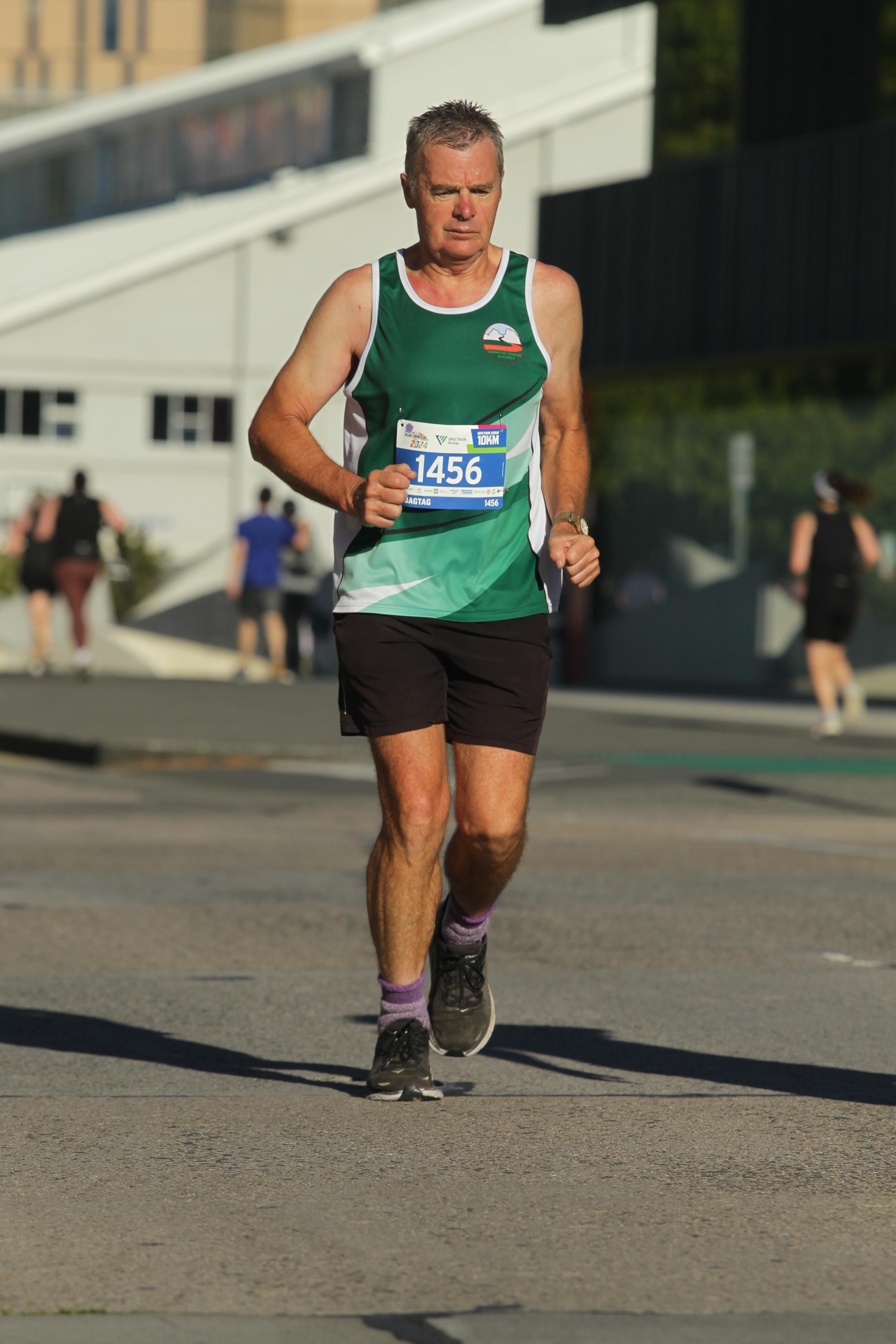
I watch the
first wave of runners take off. I wander around waiting to join the second wave
of runners. An official tells me there is no second wave, only one wave. Start
running.
I run down a
semi deserted road. The peloton of runners has disappeared ahead of me. Ah
well. Better run. I enjoy plodding down the road. On my left is the river. On my
right is native bush which hides the Kangaroo Bluff Battery.
1873: Local cruising
Russian warships prompted the need for a third battery to support Battery Point
and the Queens Battery.
1884: Kangaroo
Bluff Battery or Fort was completed. It was surrounded by a moat and prickly
hawthorn hedges as protection from enemies on foot. Shots from the battery were
fired in 1884.
The run
follows the esplanade around the river until we enter the Bellerive shopping
centre. This area has many historical homes and buildings which were sleeping
until us runners arrived and woke them up.
The first
water station. I take two cups of water and tip one cup over my head and shirt.
My running experience is water is good. It prevents me lying on the ground
trying to ascertain what are those people looking at.
Run up Rosny
Hill. Local knowledge tells me on top of Rosny Hill is a lookout with sweeping
views of our river, the mountain, The Tasman Bridge and the Royal Tasmanian
Botanical Gardens. We plod up Rosny Hill bypassing the top of Rosny Hill.
We continue pass
the Clarence Aquatic Centre and Sports Centre.
1963: The
Clarence War Memorial Pool opened. Surrounded by pleasant gardens.
1982: It was
decided to cover the pool to allow it to operate all year. Covered with a flexible
bubble. The bubble was very effective
and a popular landmark. At the time it was the premier aquatic centre in the
state.
2002/3:
Bubble was replaced with a permanent building.
We now run
onto a Tasman Bridge without cars. It is a delightful experience with an
amazing view. Memories of driving the bridge or walking the narrow paths on
either side vanish and are replaced by the view. At the summit of the bridge, I
feel like exploding into a backward somersault, but I’m a stranger to such
behaviour and now is not the time to…
I remember
the race and plod on down the bridge. I am aware of an annoying wind. The
arrival of this wind makes running more difficult and gives my head something
to think about.

My story is
I make up the numbers. Today I plan to plod slowly without talent or skill,
with a sore leg. My right leg began as a sore foot which spread to my hip and
now joined by my knee. I manage the pain by running. My experience is my leg
feels after I run. My other story, for me, it is hot. My weapon to combat the
heat is water.
It is a
beautiful day. Sunny, clear skies with, at the start line, no wind. Most people
I speak to say it is their first time. I begin to feel like an experienced
runner. Everybody I speak to says what a beautiful day it is. I think it is too
beautiful. I dream of an overcast sky and a cool breeze.
19th
Century: Many football and cricket
matches were played locally. One recorded match is a football match between
Carlton and Bellerive in 1884.
1914:
Bellerive Recreation Ground was opened.
1987/88: This
ground became the home of Tasmanian cricket.
2003:
Upgrade to ground completed. Including a
new grandstand. The David Boon Stand.
2009: Light
towers were installed.
2010:
Inaugural Run The Bridge fun run.
2011:
Officially renamed the Blundstone Arena following a naming rights deal.
2012: The
first AFL matches were played with North Melbourne Kangaroos the home
team.
2013:
Completion of more redevelopment which saw the construction of the Ricky
Ponting Stand
2015: 17,544
people watched North Melbourne play Richmond in the AFL.
2016: 18,149
people watched Hobart Hurricanes vs Perth Scorchers, in the BBL.
This side of
the river was settled in the 1820s. It was initially called Kangaroo Point.
2024:
Cricket Tasmania say the ground is no longer suitable for them.

The latest song from Grandfather Alan.
Deep down
inside of her
A hidden grain hibernates.
A tiny kernel of love.
Sleeps snoozes and waits.


The P2P involves multitudes
of volunteers and paid workers such as police.
The volunteers on the drink stations were all well aware and very
helpful. Some of them I recognised. Thank you to all of you.
With the aid Mr Goggle
I check the race results. The results give me a time of 3 hours 44 minutes and a
positum of 1000. The last person came in 1004.
I have experienced
everything. I’ve done it all. I have experienced all types of running. Running
has helped me learn about myself.
Forty years ago, I
ran a 90 minute half marathon in Pietermaritzburg. I have just finished a half
marathon in 3 hours and 44 minutes.
Running has helped
me learn how to be healthy. Physically, emotionally and socially.
Is it the world’s
toughest half marathon?
How easy or difficult
I find a race depends on my emotional, physical and social health; the weather;
the food I eat before; my race plan and the course.
In the P2P I had
social support and I was prepared. I knew what to expect. I had a good race
plan. I ate well. Emotionally I was healthy though some people may debate this.
The weather was perfect. For me the race was very steep. My legs were taken to
their limits. I would say this is my steepest half M. As for toughest…

I begin to catch
up to walkers. The first walker I catch says to me: I’ve had enough. I’m done.
The next walker
says: I’m over this.
I think: You are
not over the mountain.
My running morphs
into walk/run/shuffle/stumble.
Buses begin going
down the mountain. A policeman says to me: Stay on the left-hand side of the
road.
After about twenty
kays a policeman says: We are going to finish at 11:40. If you are not at the
finish then a bus will pick you up and take you down.
I decide to keep
on moving. I will see where I finish up. If they take me off the road then big
deal.
Surrounded by
walkers the finish flags emerge.

I cross the finish
line and say to the lady: I don’t know if my net time is good enough.
The lady gives me
a medal and says: I am giving you a medal. Well done.
Her attitude was
fantastic. Big thank you to her.
I then walk past
stacks of bottled water and look for my gear bag.
A few buses wait.
A man says they are all full of people; wait for the next bus.
I wear a jumper
and sit on a rock. I congratulate a few people and we talk about the race.
When I ask: If you
are doing to next year, they all groan and look at the sky. Nobody says can’t
wait for next year.
A young guy near
me says: My legs say no.
My reply is: Next
week your legs will recover and your colleagues at work will say well done and
you may start to think maybe…
One guy says: Not
as fast as I wanted. I look around at all the exhausted legs and think. I think
everybody up here would say: Not as fast as I wanted. Everybody I see has sore legs, is wearing a
medal and has learnt something about themselves.
We are all
exhausted. Sitting or standing is an ordeal.
A group of
schoolkids is very happy. One of them
asks me to take their photo which I am very happy to do. Their school excursion
was a walk-up Mt Wellington.
Sitting on the
rocks it is very windy. We ignore the view. We wait and after about half an
hour a bus appears.
We board the bus
and it sways and slips down the mountain. I’ve eaten nothing but my stomach
abhors the trip down. The trip down seems to last forever. Worse than the trip
up. I vomit into my mouth, keep my mouth closed, swallow my feedback and feel
better.

Outside the Casino
a crowd of people gathers. An invisible voice launches a series of warm-up
exercises. All done with good humour. The crowd is happy, well-behaved and
impatient to begin running.
I greet a few
people I know from the running community.
I tell one: I would
be happy to reach the pinnacle and be last one across the finish line. My aim
is just to finish. Later that day I remember what I said.
Another person
says: Only doing the Point to Pub.
My reply is: Don’t
use the word only. The Point to Pub is an achievement you should be proud of.
The crowd inches
towards the start line. I find myself at very back of the group. The race
starts. The wave of runners actually running sweeps back. Eventually it reaches
me and I jog carefully. I cross the start line about three minutes after the
gun was fired.
Initially we run through
the suburbs of Hobart. Traffic control people are ubiquitous. Sunday morning Hobart
consists of runners, Hi-Vis jackets and unhappy motorists sitting in stationary
cars.
I yell out to one
of the multitudes of Hi-Vis jackets: Thank you for your work.
His reply: You are
the one doing all the hard work.
Many people stand,
watch and yell encouragement. There are
many young children watching.
The clouds think
about showering but decide not to.
On The Mountain, I find myself running by myself surrounded by mist. The mist is spooky, beautiful and quiet. Out of the mist emerges my favourite tree which is proudly blooming. Telopea Truncata shines brightly in the mist. I will remember that moment for ever.

Today: Us locals all call it The
Mountain. We always look at The Mountain behind wisps of cloud to see how much
snow is on it. We always look at The Mountain to tell us what weather is
coming.
1798: Bass and Flinders
circumnavigated the island. They named Derwent River and Table Mountain.
1832: The Mountain was renamed
Mt Wellington after the Duke of Wellington. He never saw The Mountain.
1895: Weather station began on
the mountain.
-1900: Many recreational huts
were built by the people of Hobart. Most were destroyed in 1967 by bushfires.
1934-1937: Road to the summit
constructed to provide useful work for the unemployed in the Great Depression.
Recently: Some Tasmanians
prefer to call The Mountain, Kunanyi. The Mountain lies somnolently. She
is happy when people run, climb, walk or use her. She is happy when people are active on her.
Increasing their physical, social and emotional health.
Today: Huts for visitors at the Springs, the Chalet
and the summit.
The road is often closed above
the Springs due to ice or snow.
At the summit there are
transmission towers for radio and TV and a weather station.
The summit is, normally, the
place for people, who brace themselves against the wind, and scurry between
cars and shelters.

I ask every runner
who passes me. Are you doing the P2P?
Every runner knows
of the P2P. The answers are either yes, coming up soon or no you must be
kidding. It’s too tough.
My experience is
it is a tough race. Doable but difficult. It is one race where your time is
irrelevant. The race is so unique you cannot compare your time to any other 21
km race. Finishing is the only aim.
I train as per normal.
I train on The Domain. That is hilly. I keep doing that. It’s hilly, close and
pleasant. And pretty similar to the actual route.
When training I
always look at The Mountain. The mountain sleeps indolently. It lies waiting
and watching. It lies beneath her light covering of clouds challenging me to
run up her. I can hear the somnolent mountain say: Good view from the top.
I pick up my
number at a local running shop.
I notice gels. Do I need food during the race? Do I need
glucose? The packaging is professional and impressive. They must be good
because they are well packaged. They might help and couldn’t harm. I buy a
couple.
The weather on the
day of the race is critical. The weather at the pinnacle is different from the
weather at the point. Different worlds.
My app says Hobart
Tomorrow: 8-12 am. Cloudy. Medium chance of showers. 10-20%.
Light winds. Maximum
temp 21 degrees.
Mt Wellington
Tomorrow: Cloudy. Medium chance of showers. 15-25%.
Light winds. Max
temp 11 degrees.
After reading my
weather app I devise a plan for tomorrow.
Wear normal
running shorts and shirts. Don’t wear sunglasses or hearing aids. Carry a
splash jacket and a cap for showers.
Place warm jacket
in gear bag which I will put on when reaching the summit.
3150 people
participated in the Point to Pinnacle in 2023.
Before talking
about this year’s P2P we have to go back in time.
1968: The Labor
Party, who was the governing party, asked the people of Tasmania if they wanted a
legal casino.
The referendum question:
Are you in favour of granting Federal Group the licence to operate a casino at
Wrest Point?
Before the results
of the referendum were known the Labor Government passed the bill legalising
the casino.
The result of the Referendum
agreed with the government.
53% voted yes.
47% voted no.
11% voted informal
Wrest Point Casino
was the first legal casino in Australia. It replaced Wrest Point Hotel which
was a popular and luxurious hotel built in 1939.
Wrest Point Casino
is a 17-story tower topped with a revolving restaurant. The tallest building in
Hobart.
1973: Wrest Point
Casino opened for business.
1984: Conference
Centre opened.
1996: Boardwalk
began.
2017: The building
was heritage listed.
Today: The casino
is an integral part of Hobart. The place for many school and community events.
Many people
frequent the Casino to eat; drink; enjoy the views of the river and the
mountain. Hobart is full of people who have gone to the Casino and have never
gambled there.
1994: The first
Point to Pinnacle fun run attracted 56 runners.
Alan Rider and
Haydyn Nielson organized the initial run. The idea came to Alan Rider after
walking from Lauderdale to the summit of Mt Wellington and back again.
Today: Marketed as
the world’s toughest half marathon.
1975: The Copenhagen City Heart Study began. It followed 8577 people for 25 years; the sports they played; and their physical activity.
Results: Any physical activity resulted in increased
life expectancy. The amount of increased life expectancy varied with the sport
played.
Tennis: 9.7 years
Badminton 6.2 years
Soccer 4.7 years
Cycling 3.7 years
Swimming 3.4 years
Jogging 3.2 years
Calisthenics 3.1 years
Health Club Activities 1.5 years
The Copenhagen
City Heart Study found
that adults who played tennis or other racket sports lived longest.
Why is
social sport better for you than solitary sport?
When you
play pickleball you are exercising socially. You are becoming healthier
socially.
Playing pickleball
you subconsciously watch your opponent. You watch where they move. You
anticipate. You watch their shot. Your behaviour depends on other people on
the court. You exercise socially as well as physically.
The
inability to alter your behaviour to fit in and match the people around you is
a sign of poor social health and poor emotional health.
The Copenhagen City Heart Study has dramatically changed paradigms. Many studies have flowed from this seminal
study.
They all show the same thing.
Physical, emotional, and social health are all related and all are important.


